site echoes: A Report of the Council levies Mandatory stresses that the tax system operates transfers to the benefit of older assets to the detriment of
| |
| |
The more than 65 years are at the party. After Wednesday, INSEE said they are happier than others, a report by the compulsory contributions came to reveal yesterday that the French tax system is more favorable than other generations. As it stands, the system of compulsory levies "operates an instant transfer for the benefit of households and individuals over 65 years and under 30 years at the expense of active classes" , Said the report presented yesterday by Philippe Seguin, Chairman and first President of the Court of Auditors.
CSG lower
The over 65 "have both a higher standard of living for individuals younger and a lower level of taxation" . The latter results from a "CSG rate much lower on pensions" and a "more favorable to tax unearned income" as those activity, even in the insulating The large size occupied by social contributions in earnings.
By their way of life, beyond the sixties and more widely levies on consumption. With age, firstly, the overall consumption decreases, and secondly, the proportion of low-taxed products (reduced VAT) increases in purchases. For example, they consume more drugs (2.1% VAT), go to museums more often and read more (VAT 5.5%) than their younger counterparts.
same time, the social debt (85 billion euros) product "instant transfers for the benefit of over 65 years" . The breakdown between generations of CRDS, whose function amortize this debt "led to make the only net beneficiaries of the system" with benefits received in excess of their own contribution.
"Free Lunch"
Added to this table the pension system, which "benefited the early generations" who received higher benefits in having contributed less. In short, they have received "free lunch" says Philippe Seguin.
The report notes that "intra-family transfers (gifts, inheritances) encouraged recent reforms have no way sufficient to rectify the situation, insofar as they represent only 1% of total wealth. Similarly, "other tax reforms have had a relatively neutral impact on the intergenerational inequities" says Emmanuel Macron, Rapporteur of the study.
In these circumstances, the Council suggests the tax burden on the executive to better take into account the issue of transfers between generations, so far rarely used as a reading grid, in his choice of fiscal and social policy.
 |
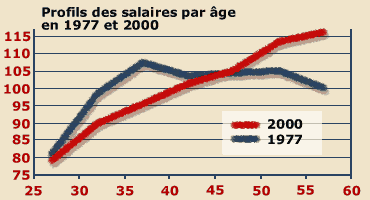
| The Council stresses that the tax burden over 65 years are generally subject to lower tax level, while they enjoy a standard of living higher than that of younger On the site of the observatory inequalities: In 1975, employees aged 50 on average earned 15% more than employees of 30 years, age adults living on one foot while equality. Today, the gap is 40%. In 1977, employees from 30 to 34 years earned less than 1.5% the average employee ... 10% less in 2000. Unemployment helping the fruits of economic growth slowed since 1975, have been reserved for over 45 years. Generational reading to understand that young people valued yesterday became the senior promoted today by seniority. Young people today suffer far more than other age groups the pressure of lack of employment. Note: 100 = average wage of the year. Source: Surveys 2000 Employment and Training, qualification and professional 1977, INSEE; archives LASMAS-BMI To report complement an excellent slideshow of Louis Chauvel for his course from Sciences Po Paris: [PPT] PowerPoint Presentation |


0 comments:
Post a Comment